ingredients
The Sugar That Starves the Bacteria
Nobody markets it hard, yet it keeps turning up in threads where people compare notes. It's the only sweetener the cavity bacteria can't use.
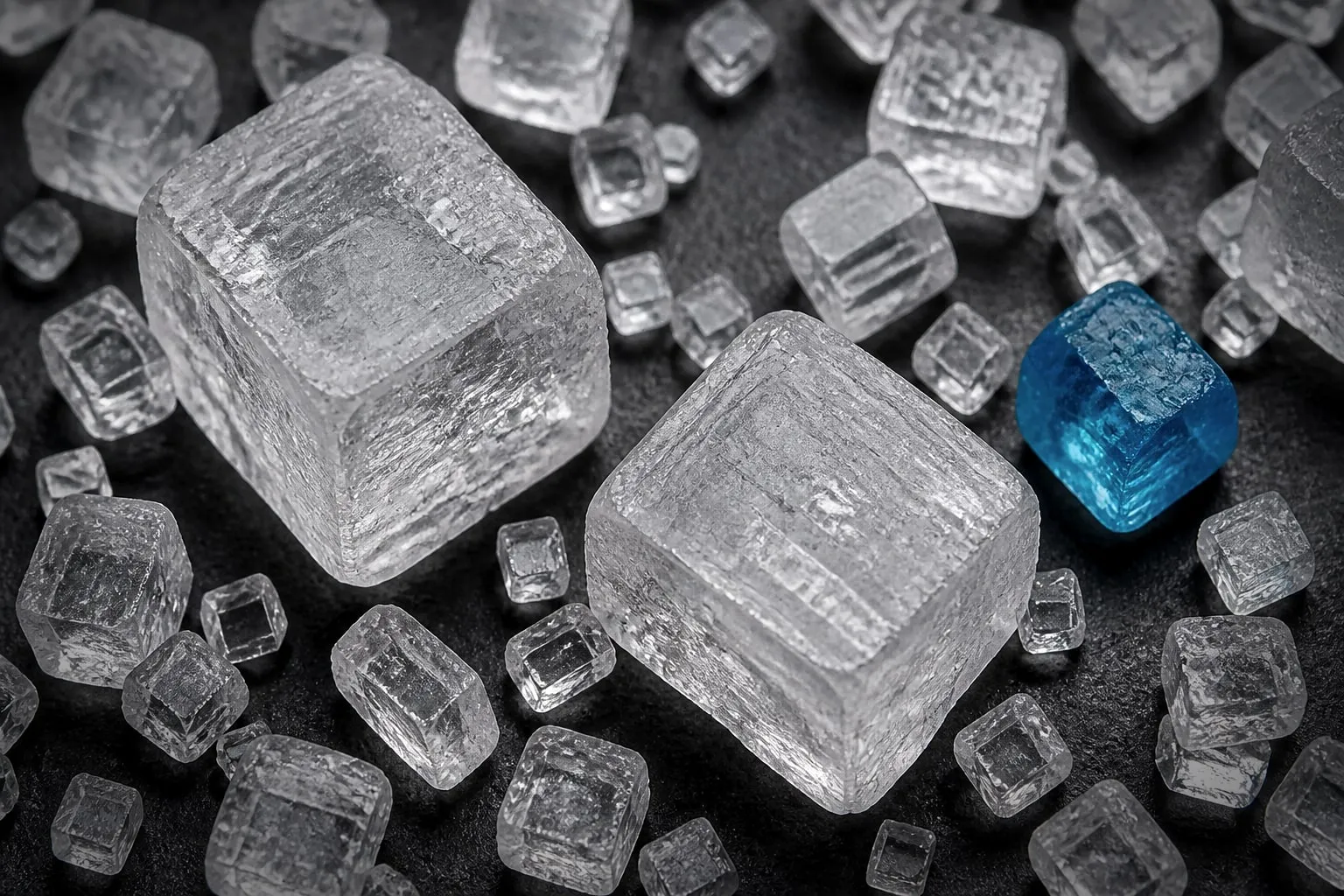
Most ingredients get into your mouth through advertising. This one gets in through conversation.
Read enough threads where people compare what worked and the same word keeps arriving, from people who don’t know each other and aren’t selling anything:
Xylitol really helps with dry mouth.
Anything with xylitol is great for saliva production.
Swishing xylitol every morning helped immensely.
Put plain xylitol crystals in your mouth and within a minute or two you’ll have plenty of saliva.
Xylitol is the ingredient that stimulates our natural saliva and fights the bad bacteria in our mouths.
Separate people, in separate discussions, landing on the same thing. That’s unusual, and it’s worth understanding why they’re right.
It’s a sugar that can’t be turned into acid
Here’s the mechanism, and it’s satisfying.
Cavities are not caused by sugar directly. They’re caused by what bacteria do with sugar: they ferment it and excrete acid, and that acid dissolves enamel. Sugar is the fuel, the acid is the weapon.
Xylitol looks close enough to sugar that the bacteria take it up the same way. Then nothing happens. They cannot ferment it. They’ve eaten something they can’t digest, and spent energy doing it.
So it isn’t a “less bad” sweetener in the way most sugar substitutes are less bad — merely inert. It works against the organism causing the problem, by being taken up and then being useless.
And it turns the tap on
The second effect is the one people notice first, because it’s immediate.
Xylitol makes you produce saliva. Some of that is the sweet taste, some is chewing if it’s in gum, and some is the substance itself.
That matters more than it sounds, because saliva is the only repair system the mouth has of its own. It washes acid away, buffers what’s left, and carries the calcium and phosphate that go back into enamel. A dry mouth isn’t uncomfortable-but-fine; it’s the repair mechanism switched off.
Which is exactly why the people quoted above found it while looking for something else. They weren’t hunting for a cavity strategy. They were trying to stop their mouth feeling like paper, and picked up the second effect for free.
Frequency beats quantity
The one practical thing worth knowing, and almost nobody says it.
Because the point is to interfere with bacteria while they’re feeding, several small exposures spread across the day do more than one big one. After meals is the obvious moment. Last thing at night is the other one, for a reason below.
That’s also why gum is the format most people meet it in, and why gum works:
How has the Xylitol gum treated you? I have been chewing this … after meals and I really havent had any cavities since I started implementing xylitol gum r/Biohackers
Gum has an honest advantage — chewing produces saliva mechanically, on top of everything the xylitol does. And an honest limit: it works while it’s being chewed. Twenty minutes, then it’s over, and nobody chews in a meeting, on a call, or asleep.
Which is where the night comes in
Saliva production falls to almost nothing during sleep. Eight hours with no rinsing, no buffering, and no minerals arriving.
That is simultaneously the longest stretch the bacteria get undisturbed and the stretch when nothing chewable is available. Anything that helps overnight has to stay put on its own — which is why xylitol also turns up in sprays and lozenges rather than only in gum.
Same ingredient, different clock.
What to check on a label
It should be near the top of the ingredients. Xylitol is expensive compared to sorbitol or maltitol. Products that want the word on the front but not the cost put a little in and lead with something cheaper.
Sorbitol and maltitol are not the same. Both are sugar alcohols, both lower risk than sugar — but some oral bacteria can slowly ferment them. Xylitol is the one they can’t.
⚠️ It is dangerous to dogs. Genuinely, at small doses, and this is the one thing about xylitol everybody should know. Keep gum and lozenges where a dog cannot reach them.
The short version
Cavity bacteria need fermentable sugar. Xylitol is the sugar they take and can’t use.
Strangers worked that out by comparing notes, before anyone advertised it to them.
Questions people actually ask
What does xylitol actually do for teeth?
Two things. The cavity bacteria take it up as if it were sugar and then can't ferment it into acid, which starves them. And it triggers saliva, which is the mouth's own repair system.
Is xylitol just a sweetener?
It's a sugar alcohol, and it tastes almost exactly like sugar. The difference is what happens after: normal sugar gets turned into acid by the bacteria, and xylitol doesn't.
How much xylitol do you need?
Frequency matters more than dose. A few small exposures spread through the day does more than one large one, because the point is to keep hitting the bacteria while they're feeding.