ingredients
It Works by Making You Drool
Sugar-free gum after a meal is one of the few genuinely evidence-backed habits nobody bothers with. It works by making you produce saliva, not by cleaning anything.
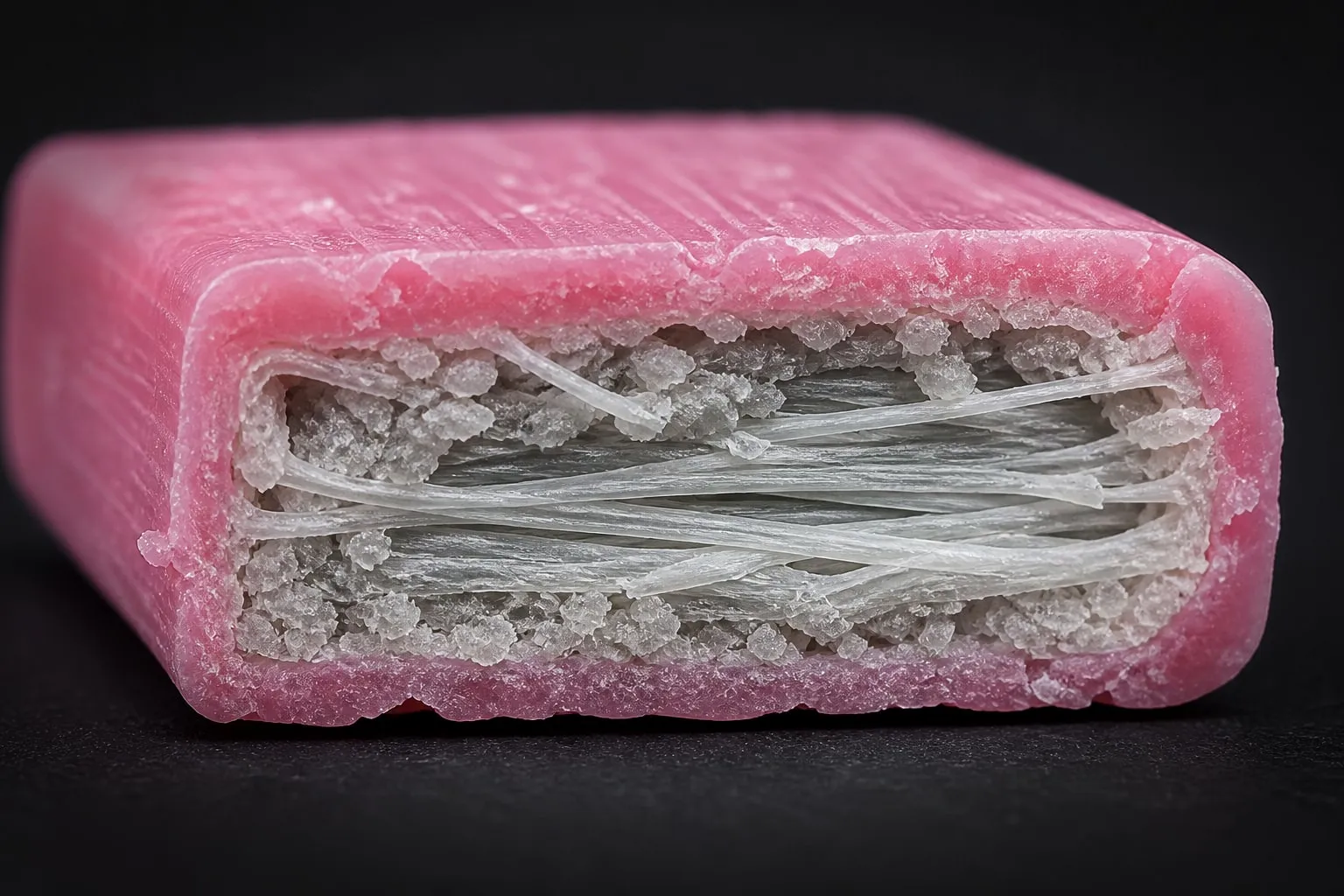
Sugar-free gum after a meal is one of the few genuinely evidence-supported dental habits that almost nobody bothers with, and it is worth understanding why it works — because the reason is not the one people assume.
It does not clean your teeth. It makes you produce saliva.
What saliva actually does
Calling it moisture undersells it considerably. Saliva is the mouth’s entire maintenance system, and it does four separate jobs.
It buffers acid. Bicarbonate and phosphate in saliva neutralize the acid produced by bacteria after eating, raising the pH back above the level where enamel dissolves.
It carries minerals. Saliva is supersaturated with calcium and phosphate, and those are the raw materials for rebuilding enamel that has just been partly dissolved.
It washes. Physical clearance of food debris and sugar from the surfaces.
And it is antibacterial, containing enzymes and antibodies that keep the bacterial population in check.
Every one of those scales with flow rate.
Which is the whole mechanism
Chewing produces saliva mechanically. Stimulated flow can be several times resting flow, and it starts within seconds.
So chewing gum after a meal shortens the acid attack. Instead of the mouth sitting below the critical pH for twenty or thirty minutes while saliva slowly catches up, the flow is turned up and the pH recovers much faster.
The effect on cavity rates in trials is real and modest, and it is largest exactly where you would predict — after meals, in people with a high cavity rate, and in people whose saliva flow is already low.
Which also predicts where it does nothing: chewing gum on an empty stomach, hours after eating, when there is no acid to neutralize.
Twenty minutes, after a meal. That is the whole prescription.
Xylitol adds a second effect
Sugar-free gums are sweetened with sugar alcohols — sorbitol, maltitol, xylitol — and they are not equivalent.
Cavity bacteria ferment sugar into acid. Xylitol is a sugar they take up and cannot ferment. The molecule enters the cell, cannot be processed, and has to be pumped back out at an energy cost. Over repeated exposures the population declines.
Sorbitol and maltitol are better than sugar and not inert — some oral bacteria can slowly ferment both.
So xylitol gum gets a modest additional benefit on top of the saliva effect. The saliva is doing most of the work, and if the choice is between xylitol gum you will not buy and ordinary sugar-free gum in your pocket, the second one wins.
Worth knowing: xylitol is genuinely dangerous to dogs, at small doses. Keep gum where a dog cannot reach it.
Where it fits against everything else
It is a supplement to the routine, not part of it, and the honest ranking is:
Brushing with fluoride toothpaste at night, and not rinsing. Everything else is a distant second.
Cleaning between the teeth, however you will actually do it.
Fewer separate eating occasions, which is the biggest dietary lever there is.
Then gum after meals, which is genuinely useful and easily the least effortful thing on the list.
It is particularly worth it in three situations. After lunch at work, where brushing is not going to happen. After an acidic drink, where it accelerates the recovery — and where brushing immediately would actively damage softened enamel. And for anybody with a dry mouth from medication, where any stimulation of flow is worth having.
When it is a bad idea
If your jaw already hurts. Somebody with a clicking or painful joint, or diagnosed TMD, is being asked to load a struggling joint for twenty minutes several times a day. The benefit to the teeth does not outweigh that.
If it is not sugar-free. Obviously, and worth saying — sugared gum is a slow-release acid delivery system held against the teeth, which is close to the worst possible arrangement.
The short version
It works by making you produce saliva, which buffers acid and returns minerals to enamel. It does not scrub anything.
Twenty minutes, after eating, and it does nothing on an empty stomach because there is no acid to deal with.
Xylitol adds a small extra effect by starving the bacteria. And if your jaw already hurts, skip it — that trade goes the wrong way.
Questions people actually ask
Does chewing gum help your teeth?
Sugar-free gum chewed after a meal does, and the effect is well supported. It works by stimulating saliva flow, which neutralizes acid and returns minerals to the enamel — not by scrubbing anything off the teeth.
How long should you chew it for?
About twenty minutes after eating. That covers the period when the mouth is most acidic, and it is roughly how long stimulated saliva flow stays high before returning to baseline.
Is xylitol gum better than ordinary sugar-free gum?
Modestly. Xylitol is a sugar that cavity bacteria absorb and cannot ferment, so it starves them as well as stimulating saliva. Any sugar-free gum gets most of the benefit from the chewing alone.
Can chewing gum be bad for you?
For most people no. If you already have jaw pain, clicking or a diagnosed joint disorder, hours of chewing loads a joint that is already struggling, and the trade goes the wrong way.