weird
Yours Is Limited by the Teeth, Not the Muscle
The strongest measured bite belongs to a saltwater crocodile, at around 3,700 pounds. A human manages 160, and the muscle is not what caps it.
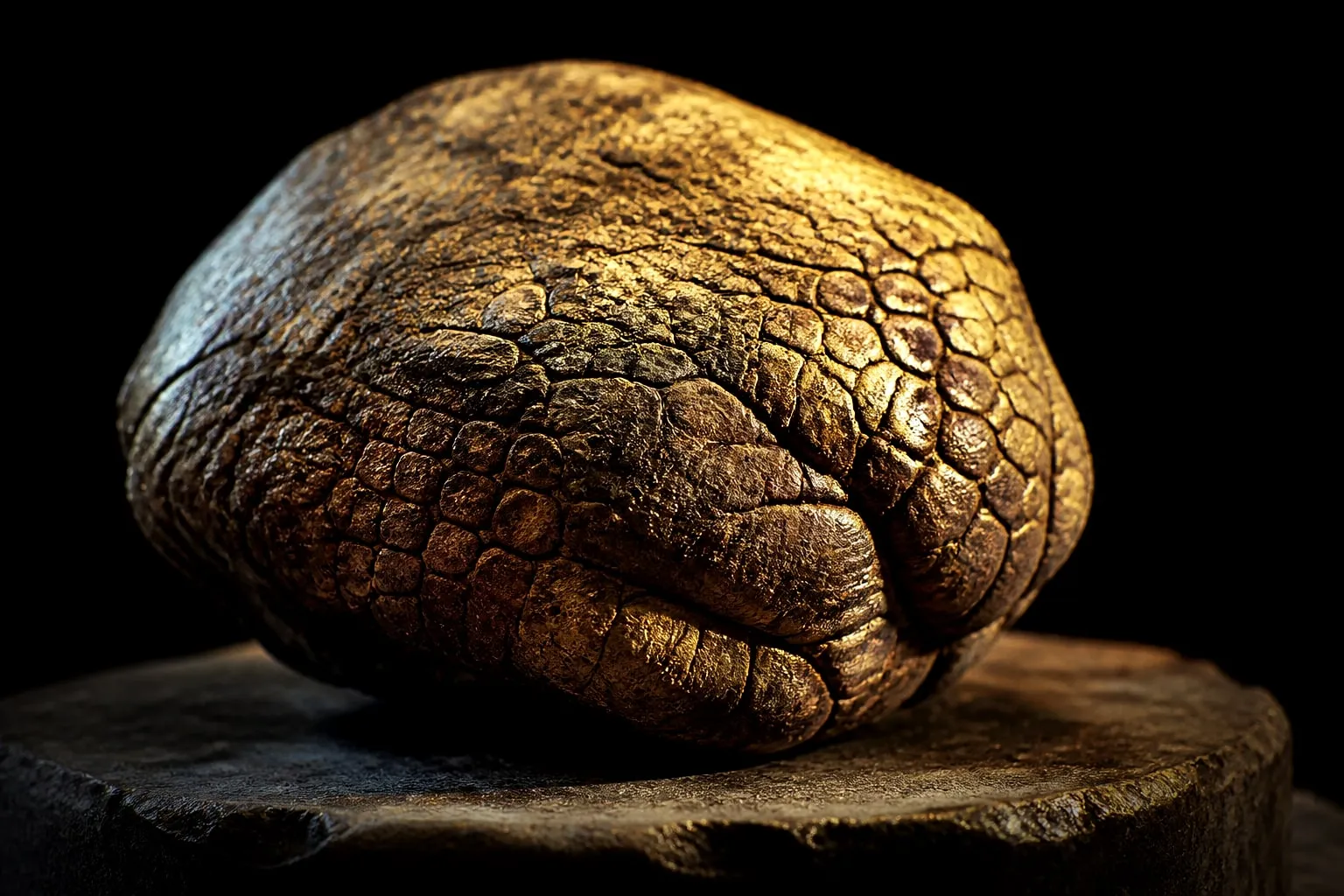
The saltwater crocodile, and the number is about 3,700 pounds of force.
That measurement came from Gregory Erickson’s group, who spent years persuading crocodilians of every species to bite a padded force transducer. The largest saltwater crocodiles they tested produced the highest bite force ever directly measured in a living animal.
For comparison, a human manages around 160 pounds at the back molars.
The living top of the list
Saltwater crocodile — roughly 3,700 lbf. The winner by measurement rather than estimate, which matters.
Nile crocodile and American alligator — both in the low thousands, and the pattern Erickson’s team found is that bite force scales with body size across crocodilians rather than varying much by species. A big alligator and a big crocodile bite comparably. The saltie wins because it gets bigger.
Hippopotamus — frequently quoted around 1,800 lbf, mostly from a small number of measurements, and hippos are not cooperative subjects.
Jaguar — around 1,500 lbf, and unusually high for its size. Jaguars kill by biting through the skull rather than the throat, which is the behavior that pressure buys.
Spotted hyena — around 1,100 lbf, built for cracking long bones to reach marrow.
Great white shark — surprisingly lower than expected, around 4,000 lbf in one modelled estimate but with much lower directly-measured values. A shark’s teeth cut rather than crush, so raw force is less of the story.
And the extinct ones, which are estimates
Tyrannosaurus rex — modelled at around 8,000 lbf, with some estimates higher. Its teeth were thick and round in cross-section, built to crush bone rather than slice, and bitten dinosaur bones with T. rex tooth marks that penetrate deep into the shaft support it.
Megalodon — estimated in the range of 25,000 to 40,000 lbf, which would make it the strongest bite of any animal that has ever lived. Entirely modelled from jaw reconstruction, and therefore soft.
Deinosuchus, a crocodilian the size of a bus, is thought to have exceeded T. rex.
Now the interesting part about the human number
160 pounds sounds feeble against a crocodile, and the instinctive explanation is that our jaw muscles are small.
They aren’t, particularly. The masseter is one of the strongest muscles in the body relative to its size, and the temporalis fanning across the side of the skull adds substantially more.
The limit is the teeth.
The nervous system runs a protective reflex. Sensors in the tooth ligament and the jaw joint monitor load, and when force rises toward the point where enamel might fail, the reflex reduces the muscle output. You are not permitted to bite as hard as you can.
Which is not a theory. It has a natural experiment attached.
During sleep, that reflex is suppressed. People who clench and grind at night routinely generate forces well above their conscious maximum — and the consequence is exactly what you’d predict from removing a safety limiter. Cracked molars, flattened cusps, split fillings, teeth worn down to the dentin.
So the honest answer to why is a human bite weak is that it isn’t. It’s governed. The muscle can do more than the hardware tolerates, and a system that turns off overnight is the reason cracked teeth are one of the most common findings in adult dentistry.
Relative to size, the small things win
Absolute force is a game that large animals win by being large. Force divided by body mass produces a completely different league table, and it belongs to invertebrates.
Ants in several genera close their mandibles with accelerations that are among the fastest movements in biology — the trap-jaw ant’s mandible snaps shut fast enough to throw the ant into the air.
Limpets hold the record for material strength rather than force: their radula teeth, reinforced with goethite fibers, were measured as the strongest known biological material.
And a piranha relative, Megapiranha, is estimated to have had the highest bite force for its body weight of any known fish.
Which is a general rule of biomechanics. Big animals bite harder. Small animals bite harder for their size, because muscle force scales with cross-sectional area while mass scales with volume.
The human number in context
160 lbf at the molars is roughly the weight of an adult standing on a single tooth.
That is enough to crack a walnut, chew tough meat, and destroy your own enamel if applied for six hours a night.
The teeth are rated for it. They are not rated for it continuously, and nothing in the design anticipated a nervous system that would keep pressing while the owner slept.
The short version
Saltwater crocodile, about 3,700 pounds, directly measured. T. rex probably double that, and Megalodon possibly ten times, both estimated.
A human is around 160 at the back teeth, and the muscle is not what caps it — a reflex is, because enamel would fail first.
Which is why the strongest bite most people ever produce happens while they are asleep, and why they find out about it from a crown.
Questions people actually ask
Which animal has the strongest bite?
Among living animals, the saltwater crocodile, measured at roughly 3,700 pounds of force. Nile crocodiles and American alligators are close behind. Extinct animals were higher still, with Tyrannosaurus estimated around 8,000 pounds.
How strong is a human bite?
Around 160 pounds at the back molars for most people, and considerably less at the front teeth. Trained individuals and people who habitually clench measure higher.
Why is a human bite so weak?
It mostly isn't the muscle. The jaw muscles can generate more force than the teeth can safely take, and the nervous system limits output to protect them. People whose protective reflex is switched off during sleep routinely crack their own teeth.
What is the strongest bite relative to body size?
Small animals win this comfortably. Some ant species and the finger-sized Amazonian piranha relative punch far above their weight, and a limpet's radula teeth are the strongest biological material yet measured.