gums
It Hides the Warning Sign
It hides the disease while making it worse. Smokers' gums bleed less, not more, which removes the only warning sign most people ever get.
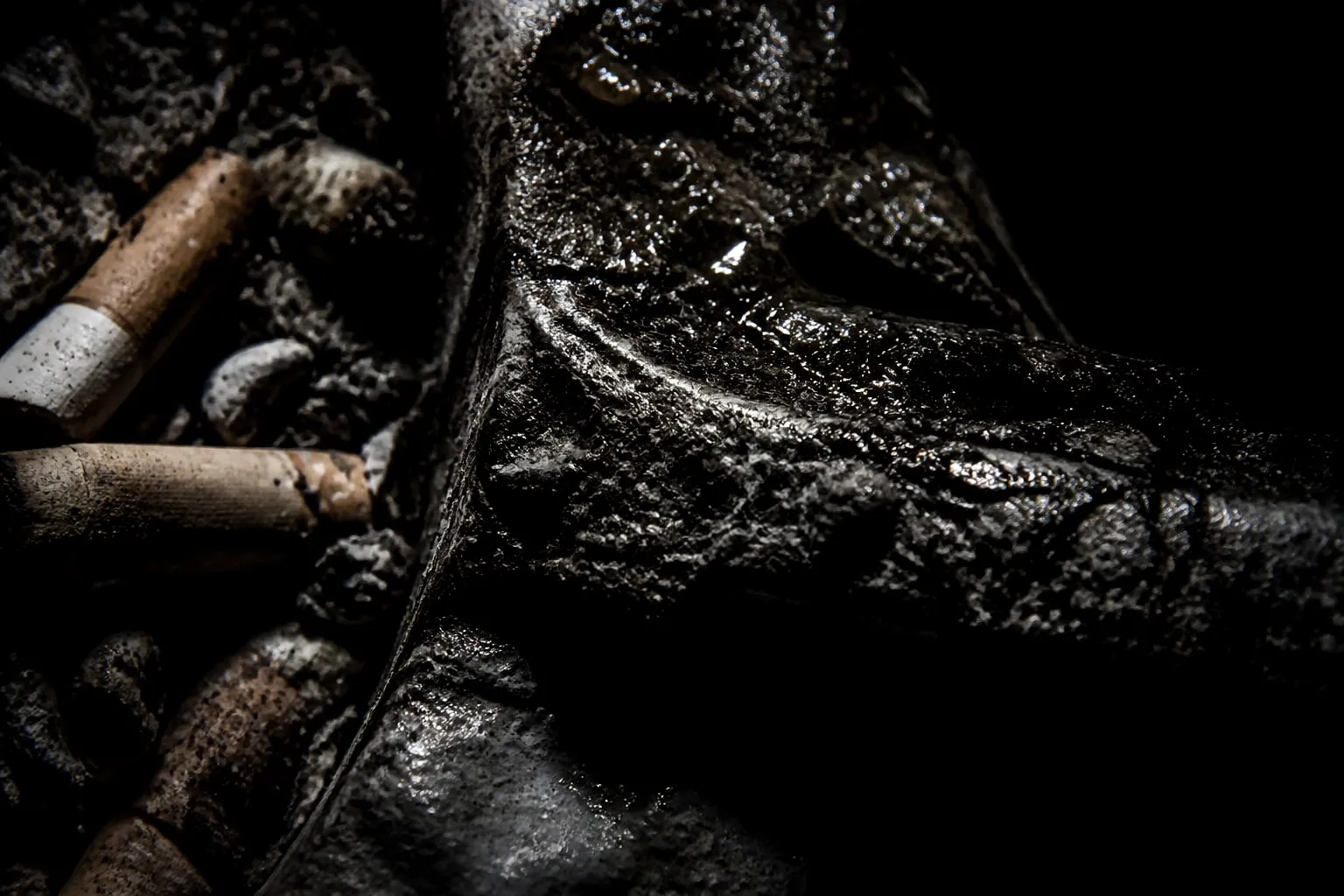
The damage smoking does to gums is real, well documented and unsurprising.
What is surprising is the mechanism, because it works in the opposite direction from what people assume.
Smokers’ gums bleed less.
Which removes the only alarm most people have
Healthy gums do not bleed. Inflamed gums do, because the tissue is engorged with blood the body has sent to fight bacteria, and the vessels sit fragile and close to the surface.
That bleeding is a signal. It is, for most people, the only signal gum disease ever produces — the disease itself is painless.
Nicotine constricts small blood vessels. The gum tissue gets less blood, the immune response is blunted, and the visible inflammation is suppressed.
So a smoker’s gums stay pale, firm and quiet while the bone underneath is being destroyed.
The disease is not milder. It is worse — smokers have substantially higher rates of periodontitis, deeper pockets, and more tooth loss. It is simply invisible, and it stays invisible until teeth start moving.
That is a rare and unpleasant combination: a condition made more severe and less detectable by the same thing.
What else it does
Impaired healing. Reduced blood supply means slower repair of everything — after an extraction, after gum treatment, after an implant. This is why dry socket is dramatically more common in smokers and why many surgeons will not place an implant in one.
A shifted bacterial population. The species found in a smoker’s mouth skew toward the ones associated with aggressive periodontal disease.
Treatment that works less well. Scaling and root planing produces measurably smaller improvements in smokers than in non-smokers with the same starting point, which is discouraging for everybody involved and worth knowing in advance rather than being surprised by.
Staining, tar into every microscopic crack, and the specific pattern on the inner surfaces of the lower front teeth.
And oral cancer, where smoking is the largest modifiable risk factor, multiplied considerably by alcohol.
The thing that happens when you quit, which nobody warns about
This catches people out badly.
Within weeks of stopping, blood flow to the gums recovers. The immune response comes back. And the tissue that was quietly inflamed all along starts behaving like inflamed tissue — it swells slightly and it bleeds.
Somebody who quits smoking and finds their gums bleeding for the first time in twenty years reasonably concludes that quitting has damaged them.
It hasn’t. The disease was always there and the alarm has just been reconnected.
Which is exactly the moment to get seen, because it is also the moment treatment starts working properly. Gum therapy in somebody who has just stopped smoking produces results much closer to a non-smoker’s, and the difference shows up within months.
What recovers and what doesn’t
Blood supply and healing: weeks.
Response to treatment: improves quickly and substantially.
Risk of further loss: drops steadily, and after several years approaches that of somebody who never smoked.
Bone already lost: does not come back. Grafting exists for specific defects and is a procedure rather than healing.
So the honest summary is the same as for the rest of the body. Stopping does not undo it. It stops it, and it makes everything you do afterwards work.
Vaping
Less studied, and the mechanism gives a reasonable prediction.
Nicotine is the vasoconstrictor, and it arrives either way. So the masking of bleeding and the impaired healing are expected to carry over even without combustion products, and early evidence points that way.
The tar and the combustion carcinogens are genuinely absent, which matters a great deal for cancer risk and less for gums.
Treating it as harmless for the mouth is not supported by anything.
If you smoke and are not going to stop
Worth saying plainly, because the alternative is people avoiding the dentist entirely out of a sense of futility.
Get seen more often, not less. Three to four months rather than six. The disease is invisible in you, so it has to be measured rather than noticed.
Ask for pocket depths every time, and ask what changed since last time. Numbers are the only warning system available when bleeding has been switched off.
And take gum treatment seriously when offered, because the window between “manageable” and “teeth are moving” is where all the difference is, and you will not feel it closing.
The short version
Smoking makes gum disease worse and makes it look better, by constricting the blood vessels that would otherwise bleed and warn you.
Which is why it gets found late, and why teeth loosening is often the first thing anybody notices.
Quitting reconnects the alarm — gums that suddenly bleed after stopping are waking up, not getting worse — and it is the point at which treatment starts working properly.
Questions people actually ask
How does smoking affect gums?
It suppresses the inflammatory response and constricts small blood vessels, so the gums look healthier than they are. Bleeding — the sign that normally tells somebody to act — largely disappears, while the underlying bone loss accelerates.
Why do smokers' gums not bleed?
Nicotine constricts the small blood vessels in the gum tissue and the immune response is blunted. The gums stay pale and firm-looking while the disease progresses underneath, which is why it is usually found late.
Do gums recover after quitting?
The disease stops progressing and treatment starts working properly, usually within weeks to months. Bone already lost does not come back. And there is a disconcerting stage where the gums begin bleeding again, which is the tissue waking up rather than getting worse.
Is vaping better for gums?
Less studied and not harmless. Nicotine is the vasoconstrictor regardless of how it arrives, so the masking effect and the impaired healing are expected to carry over even without combustion products.