gums
The Pain Is Usually the Diagnosis
Not much, and if it does that is usually information rather than technique. What hurts during a cleaning tells you what state your gums were in beforehand.
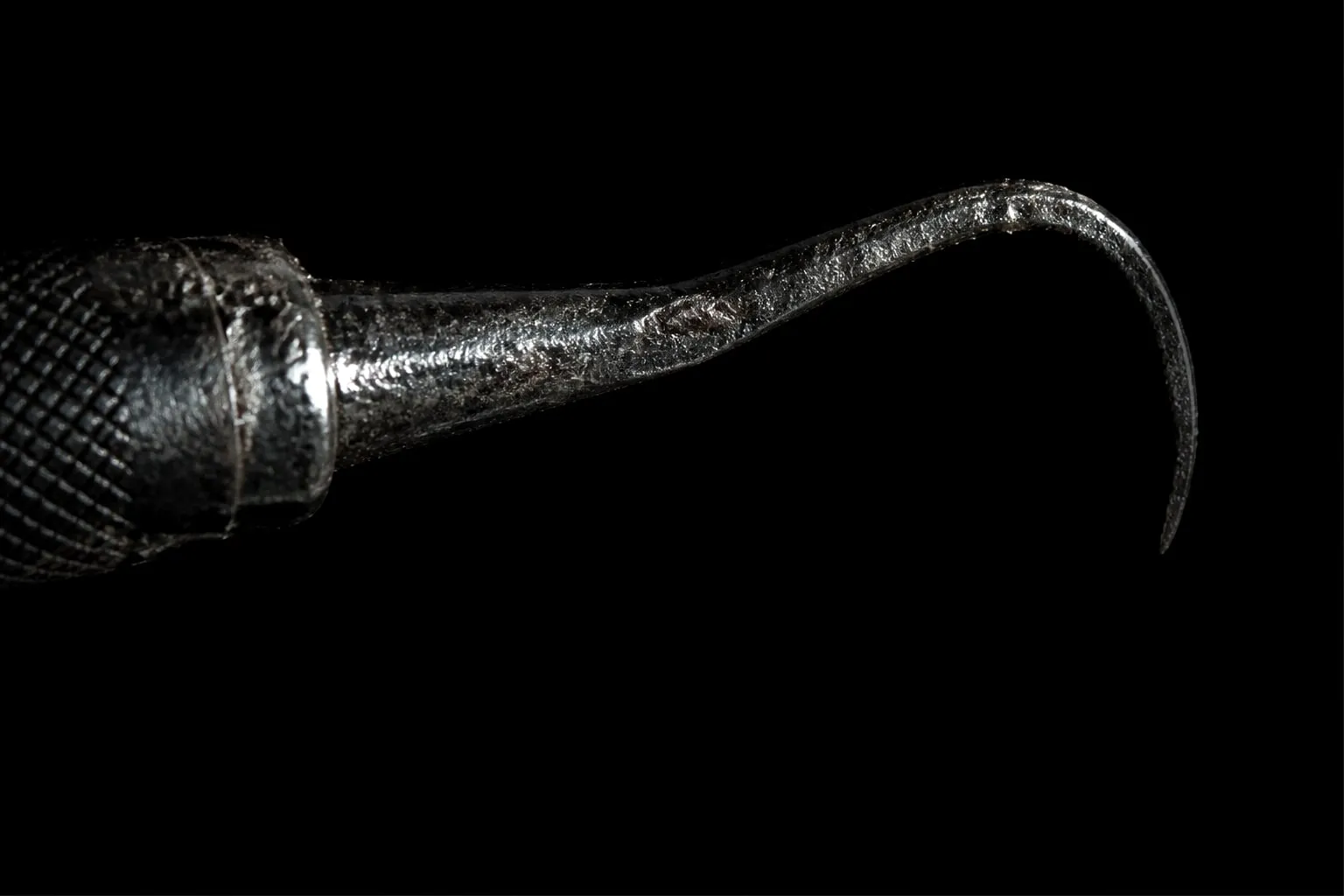
A cleaning on healthy gums is not comfortable, but it should not be painful. Vibration, water, scraping, some pressure, and a scale of unpleasantness closer to a haircut than a procedure.
When it does hurt, the reason is usually not the person holding the instrument.
What hurts, and what it tells you
Inflamed gums are tender before anything touches them. Tissue that is swollen and engorged is already sensitized, so contact that a healthy gum would not register is genuinely painful. That means the pain is proportional to how inflamed the tissue was on arrival.
Exposed root surfaces are sensitive by design. Where gums have receded, the root is covered by cementum rather than enamel, and dentin tubules run straight to the nerve. Instruments and cold water on that surface produce a sharp response that has nothing to do with force.
Calculus below the gum line has to be reached. Removing a deposit two or three millimeters under the margin means the instrument goes there. In a healthy mouth there is nothing down there to remove.
And a long gap means more to take off. Somebody arriving after three years has a substantially bigger job than somebody arriving after six months, and it is felt.
Which produces an uncomfortable pattern with a logic to it: the appointment hurts most for the people who have most reason to avoid it, and that reinforces the avoidance.
Which is why the answer is a shorter gap, not a longer one
The intuition after a painful cleaning is to leave it longer next time.
That guarantees a worse one. More calculus, more inflammation, more to remove, more tenderness — and the cycle repeats with the interval growing.
The counterintuitive move is the opposite. Somebody who found the last one bad should be booking in three or four months, not twelve. The second appointment on a short interval is dramatically easier than the first, because there is less to do and the tissue is no longer inflamed.
That is a real and repeatable experience, and it is worth knowing in advance because the first one has to be got through on faith.
What to actually ask for
None of this is unusual and none of it causes any surprise.
Topical anesthetic gel on the gums beforehand. Takes a minute, takes the edge off, and is often not offered simply because it was not asked for.
Local anesthetic, which is standard for scaling and root planing and entirely available for an ordinary cleaning if the sensitivity warrants it.
A stop signal. Raise a hand and everything pauses. This changes little physically and a great deal otherwise, because what makes discomfort unbearable is being unable to end it.
Say which teeth. “The lower left is much worse than anywhere else” is useful clinical information as well as a request — it may indicate recession or a specific problem area.
And desensitizing toothpaste for a fortnight beforehand, if cold sensitivity is the issue. It needs weeks rather than days to build up, which is why starting the morning of the appointment does nothing.
Afterwards
Sensitivity for a few days is normal. Calculus that was insulating exposed root surfaces has been removed, and the surface underneath has to acclimatize. It settles.
Slight bleeding and tenderness is normal, and proportional to how inflamed things were.
Increasing pain after a few days is not. That is worth a phone call.
And one thing that surprises people: teeth can feel loose immediately afterwards, particularly when a lot of calculus has been removed. That is because the deposit was acting as a splint, holding teeth that had lost bone support. It is a sign of what was already there rather than of damage done, and it usually settles as the gums tighten over the following weeks.
The part that is technique
To be fair about it: some of it genuinely is.
Ultrasonic scalers work by vibration and need a light touch — pressing harder is both less effective and more painful. Hand instruments need sharpening; a blunt curette requires far more force. And working systematically rather than jumping around lets a patient predict what is coming.
If every cleaning at one practice is agony and one elsewhere is fine, that is worth acting on. But that is the less common explanation, and it is worth ruling out the more likely one first.
The short version
A cleaning on healthy gums is unpleasant rather than painful. Pain usually means inflamed tissue, exposed roots, or a large amount of calculus below the gum line.
Which makes it information. The appointment hurts in proportion to what was already wrong, and that is exactly why the instinct to leave it longer makes the next one worse.
Ask for topical gel, agree a stop signal, and book the next one sooner rather than later. The second one on a short interval is a different experience entirely.
Questions people actually ask
Should a dental cleaning hurt?
A routine cleaning on healthy gums is unpleasant rather than painful. Real pain usually means inflamed tissue, exposed root surfaces, or a lot of calculus that has to be removed from below the gum line — which is information about your gums rather than about the hygienist.
Why does a cleaning hurt more some visits than others?
Because the state of the gums differs. Inflamed tissue is tender before anything touches it, and there is more to remove after a longer gap. The visit after a good six months is usually the easy one.
Can you ask for anesthetic for a cleaning?
Yes, and it is routine for deeper work. Topical gel is often enough, and local anesthetic is standard for scaling and root planing. Asking is normal and nobody is surprised by it.
Why are my teeth sensitive after a cleaning?
Because calculus that was insulating exposed root surfaces has been removed, and the gums are briefly inflamed from the instruments. It typically settles within a few days, and desensitizing toothpaste helps in the meantime.