weird
It Started as a Payment, Not a Visit
Norse warriors paid children for their milk teeth and wore them into battle. The tooth fairy herself is an American invention barely a century old.
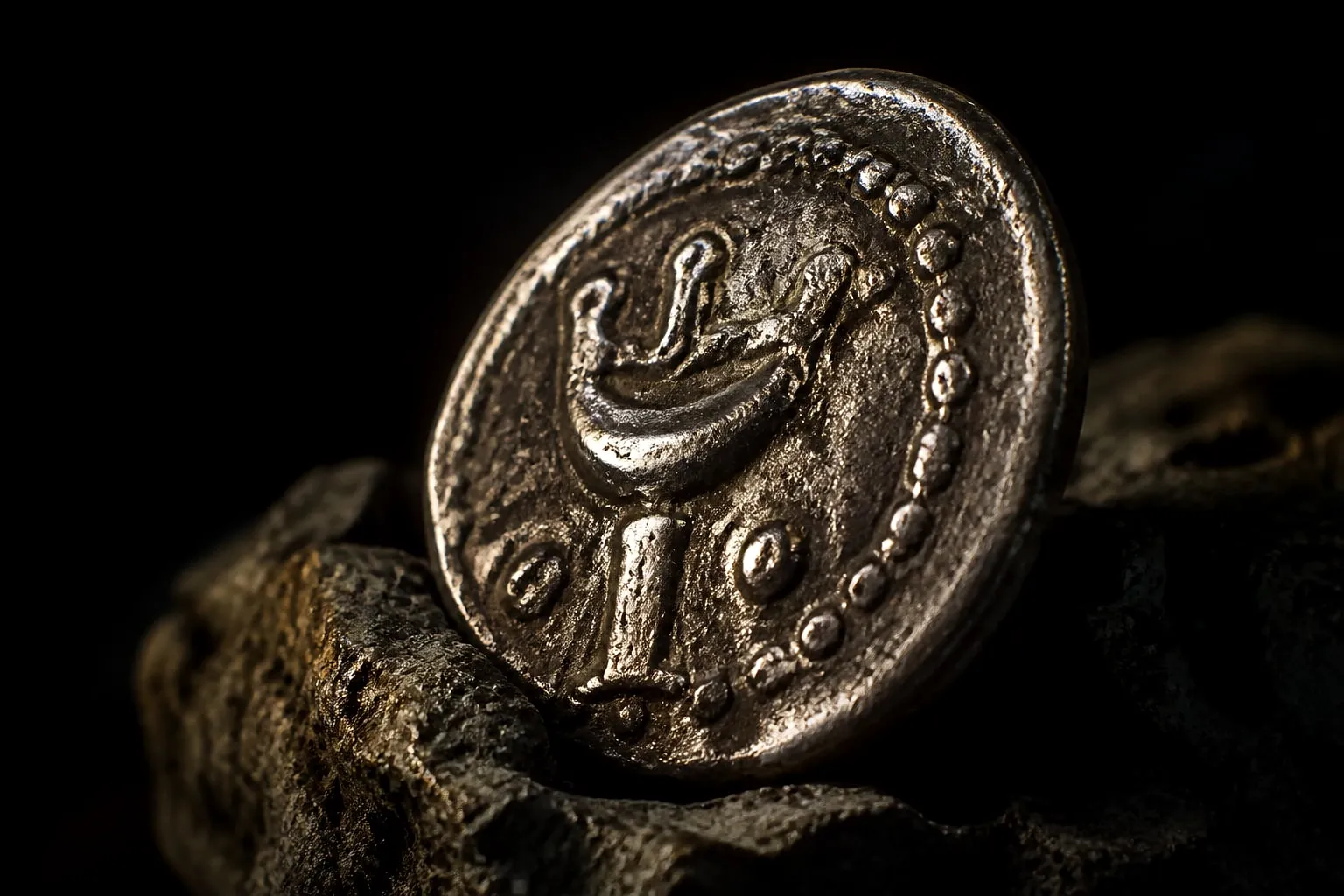
A child puts a tooth under a pillow and finds money there in the morning. Nobody thinks of this as strange, and it is one of the odder things we do.
The fairy is recent. The transaction is very old.
The Norse paid a tooth fee
Old Norse has a word for it: tand-fé. Tooth fee.
It appears in the Eddic literature as a payment made to a child when the first milk tooth came out. Not a gift for being brave — a fee, in the same register as other fees, for a thing being handed over.
Because the adults wanted the tooth.
Milk teeth were believed to bring luck in battle, and Norse warriors are recorded wearing children’s teeth strung as amulets. Archaeology turns up children’s teeth in adult graves and settings.
Which reverses the whole story as it is now told. Today an adult invents a magical creature so a child will feel good about a frightening loss. Then, an adult paid cash for a component they had a use for.
And nearly every culture had a rule about the tooth
The specific customs differ; the underlying anxiety doesn’t. A shed tooth was a piece of a person that had left the person, and that was not to be left lying around.
Burned, in a large number of European traditions — sometimes explicitly so that a witch could not obtain it and use it against the child.
Buried, often near the house, sometimes with a wish for the new tooth said over it.
Fed to an animal. A dog, a mouse, a rat. The animal chosen was usually one with strong teeth, and the logic is transparent: the replacement should come in like that animal’s.
Or thrown, with a direction. In parts of East and South Asia the rule is geometric — an upper tooth is thrown down onto the ground or under the floor, a lower tooth thrown up onto the roof, so the new tooth grows toward where the old one went.
That last one is the most charming thing in the whole subject, because it is an actual theory of eruption. Wrong, but a theory.
The mouse won almost everywhere
The animal that ended up carrying the custom in most of the world is not a fairy. It’s a rodent.
Ratoncito Pérez arrived in Spain in 1894, written by a Jesuit priest for the young King Alfonso XIII when he lost a tooth. He is a mouse who lives, in the story, in a box of biscuits in a Madrid shop — there is a plaque on the building and a small museum. He traveled with Spanish across Latin America, and he is the dominant figure there today.
La petite souris does the same job in France, and predates the Spanish version.
Topolino in Italy, Fada dos Dentes competing with a mouse in Portugal and Brazil.
The reason is the same reason a dog was chosen to eat a tooth. Rodent teeth grow continuously and never wear out — which is precisely the property a child losing a tooth would like to borrow.
The fairy is American and surprisingly late
There is no medieval tooth fairy. There is no Victorian one.
A fairy — small, winged, transactional — appears in an American newspaper item in 1908, presented as a helpful suggestion for parents dealing with a difficult child. It spread slowly through the 1920s, and became standard after the Second World War, in the period when American children’s culture was being industrialized and Disney had made fairies visually specific.
So the sequence is: an ancient fee, a nineteenth-century mouse, and a twentieth-century fairy layered on top — arriving at almost exactly the moment when the tooth stopped being wanted by anybody.
What she pays now
The figure is tracked annually, which is itself a strange fact about the modern world.
$5.84 per tooth in the United States, from Delta Dental’s 2026 poll of a thousand parents.
$7.17 for a first tooth, because the first one is an occasion.
The poll has been run since 1998, and it is quoted by economists — the payout has tracked the S&P 500 closely enough over that period to be noted repeatedly. Whether that is a real signal about household confidence or a coincidence with good publicity attached is genuinely unresolved.
Either way, a Norse child got a fee because a warrior wanted a charm. A modern child gets a fee because the tooth is worthless and the moment isn’t.
The one part that never changed
Across every version of this — burned, buried, fed to a dog, thrown on a roof, sold to a Viking, left under a pillow — the function is identical.
A child loses part of their own body, unexpectedly, with blood, and is frightened.
And an adult turns it into a procedure with a rule and an outcome. Something happens next, and the something is good. That is the entire mechanism, and it is why every culture independently built one.
The short version
Norse sources record a tooth fee paid for a first lost tooth, and warriors wore children’s teeth into battle for luck.
Most of the world uses a mouse, because rodent teeth never stop growing.
The winged fairy is American, roughly a century old, and arrived just as the tooth itself stopped being worth anything to anybody. Which is when it needed to be bought.
Questions people actually ask
Where did the tooth fairy come from?
The fairy itself is a twentieth-century American figure, appearing in print around 1908 and becoming standard after the 1920s. The custom of paying a child for a lost tooth is far older, and the Norse tand-fé — tooth fee — is the earliest clearly recorded version.
Did Vikings really buy children's teeth?
Norse sources record a tooth fee paid to a child for a first lost tooth, and children's teeth turn up as amulets. Milk teeth were believed to bring luck in battle, which is why an adult would want one.
What do other countries have instead of a tooth fairy?
A mouse, mostly. Spanish and Latin American children get Ratoncito Pérez, French children la petite souris. In several Asian countries the tooth is thrown — upper teeth down, lower teeth up — so the new one grows in the right direction.
How much does the tooth fairy pay?
About $5.84 per tooth in the United States, and $7.17 for a first tooth, according to Delta Dental's 2026 poll of a thousand parents. The figure has tracked the stock market closely enough to be noted by economists.