weird
The Portuguese Kind Cost More
Yes, and the Portuguese kind sold at a premium. A Roman poet wrote a whole insult around it, and the chemistry means it very nearly worked.
Around 55 BC, a Roman poet wrote an insult about a man’s teeth. It survives, it is very funny, and it accidentally documents one of the strangest things anybody has ever put in their mouth.
Catullus had a target named Egnatius, whose flaw was that he smiled too much. The poem builds patiently through everything wrong with smiling at funerals and at trials, and then delivers the actual accusation: Egnatius is Spanish, and in Spain, the poem says, they brush their teeth with their own urine.
That’s the joke. It only works because the audience already knew the practice existed.
It was not a fringe habit
Roman writers refer to it as a known thing rather than a rumor. And the geography in the insult is the detail that proves it, because the Romans had opinions about quality.
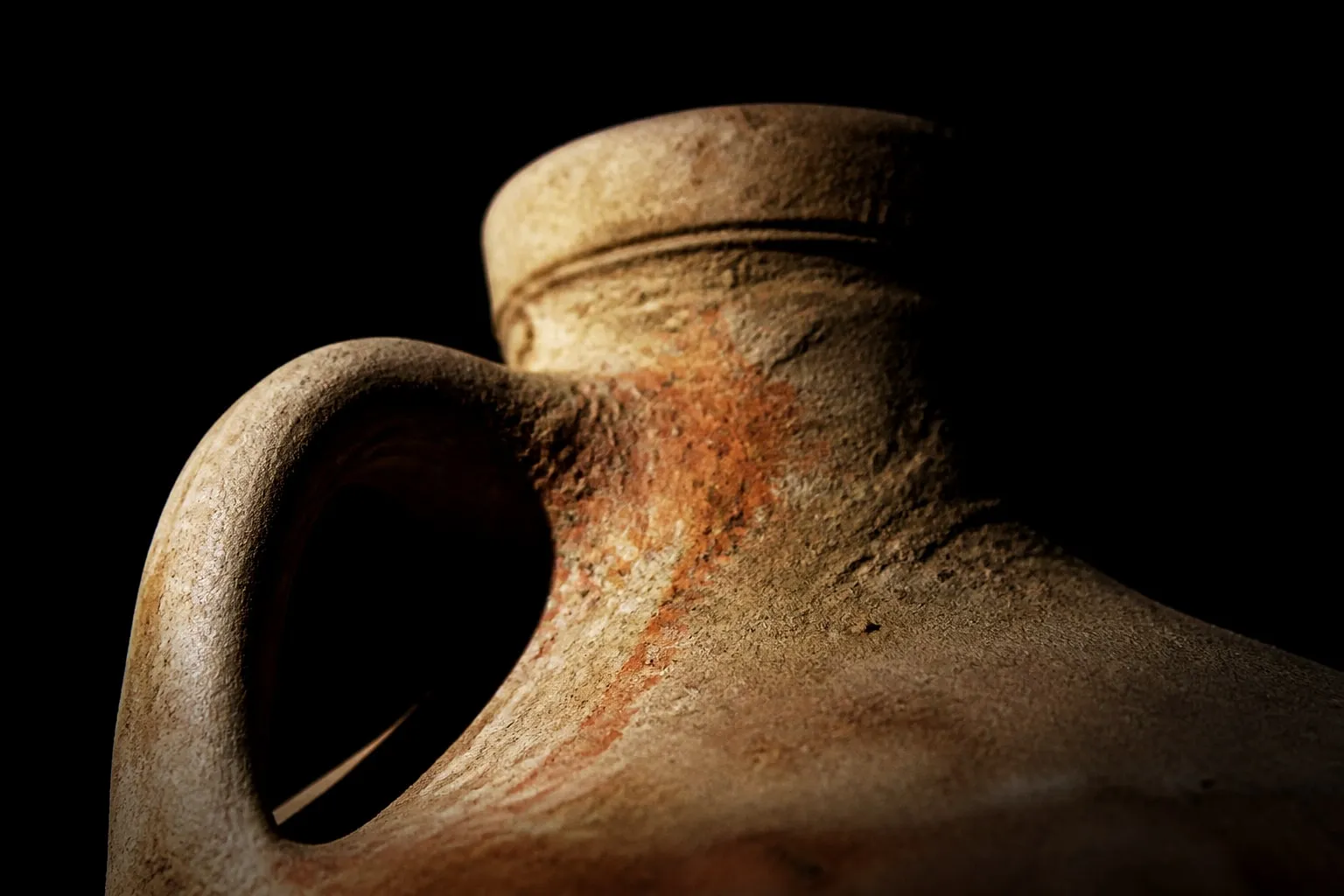
Iberian urine — from Spain and Portugal — was regarded as the best, and it was imported in sealed jars and sold at a premium.
Which is the part that turns this from a curiosity into a market. Nobody grades a substance and pays extra for the good version of it unless it is genuinely being used for something.
And it worked. Somewhat.
Here is the uncomfortable part: the chemistry is real.
Fresh urine is mostly water and urea. Left in a jar, bacteria break the urea down and it becomes ammonia — the alkaline compound still found under the sink in kitchen cleaners today.
Ammonia does three things that matter in a mouth. It neutralizes acid, which is the actual cause of enamel loss. It lifts organic stains, the same way it lifts them off a countertop. And it is mildly antibacterial.
So a Roman rinsing with aged urine was applying an alkaline stain-remover to teeth that had spent the day in acid. Their teeth really would have looked whiter.
They had no idea why, and they had picked, out of every substance available to them, one that was pharmacologically defensible. That is a much better hit rate than most ancient medicine manages.
Somebody put a tax on it
The commercial side goes further than teeth, and it produced one of the best-documented exchanges in Roman history.
Urine was an industrial raw material. Wool workers used it to strip grease from fleece and to fix dyes, and the demand was large enough that public latrines were a supply chain. Collectors gathered it and sold it on.
The Emperor Vespasian taxed it.
His son Titus objected that the tax was beneath the dignity of the office. Suetonius records what happened next: Vespasian held up a coin from the first payment and asked his son whether it smelled.
Titus said it did not.
“And yet,” Vespasian said, “it comes from urine.”
The Latin phrase pecunia non olet — money does not smell — comes from that conversation, and people still use it about revenue with an awkward source.
What else went in a Roman mouth
Urine was the notorious one, but the shelf was crowded:
Crushed bone and oyster shell, ground fine and used as an abrasive powder. Effective at removing stain, and effective at removing enamel — the same trade a charcoal toothpaste makes today, two thousand years earlier.
Charcoal. Also then. Also abrasive.
Myrrh, which is genuinely antimicrobial and still turns up in mouthwash formulations.
Frayed twigs as brushes, from trees with antibacterial sap — the miswak tradition that continues in parts of the world now, and which performs respectably in modern comparisons against a toothbrush.
And mastic, a tree resin chewed to clean the mouth and freshen breath. Which is chewing gum, arrived at independently, and it is still sold on Chios for the same purpose.
The uncomfortable summary
Rome had no anesthetic, no understanding of decay as an infection, and no fluoride. What it had was extraction, abrasive powders, and a rinse that was chemically sound and socially mortifying.
Two thousand years later the products have changed and the failure mode hasn’t: the abrasive powder that makes teeth look whiter by removing surface is still on sale, still popular, and still doing what oyster shell did.
The urine, at least, has been retired.
The short version
Yes, really. Not as a peasant remedy but as a traded commodity with a preferred country of origin.
Aged urine becomes ammonia, ammonia neutralizes acid and lifts stains, and their teeth would genuinely have looked better for it.
And an emperor taxed the supply, then told his son the money didn’t smell.
Questions people actually ask
Did Romans really use urine as mouthwash?
Yes. It was a recognized practice, written about by Roman authors, and imported Iberian urine was considered the best quality and priced accordingly.
Why would urine clean teeth?
Stored urine breaks down into ammonia, which is alkaline and a genuine cleaning agent. It neutralizes acid and lifts stains, so the practice was not as absurd as it sounds.
Who wrote about it?
Catullus, in poem 39, mocks a man named Egnatius for his conspicuously white teeth by claiming he is Spanish and therefore in the habit of scrubbing them with his own urine.
Was urine taxed in Rome?
Yes. Emperor Vespasian put a tax on the urine collected from public latrines, because it was a commercial raw material for the wool trade. When his son objected, Suetonius records him holding up a coin and asking whether it smelled.