ingredients
Fluoride Hardens It. Hydroxyapatite Puts It Back.
Fluoride has seventy years of evidence. Hydroxyapatite is what enamel is actually made of. They don't do the same job, and most people are asked to pick one.
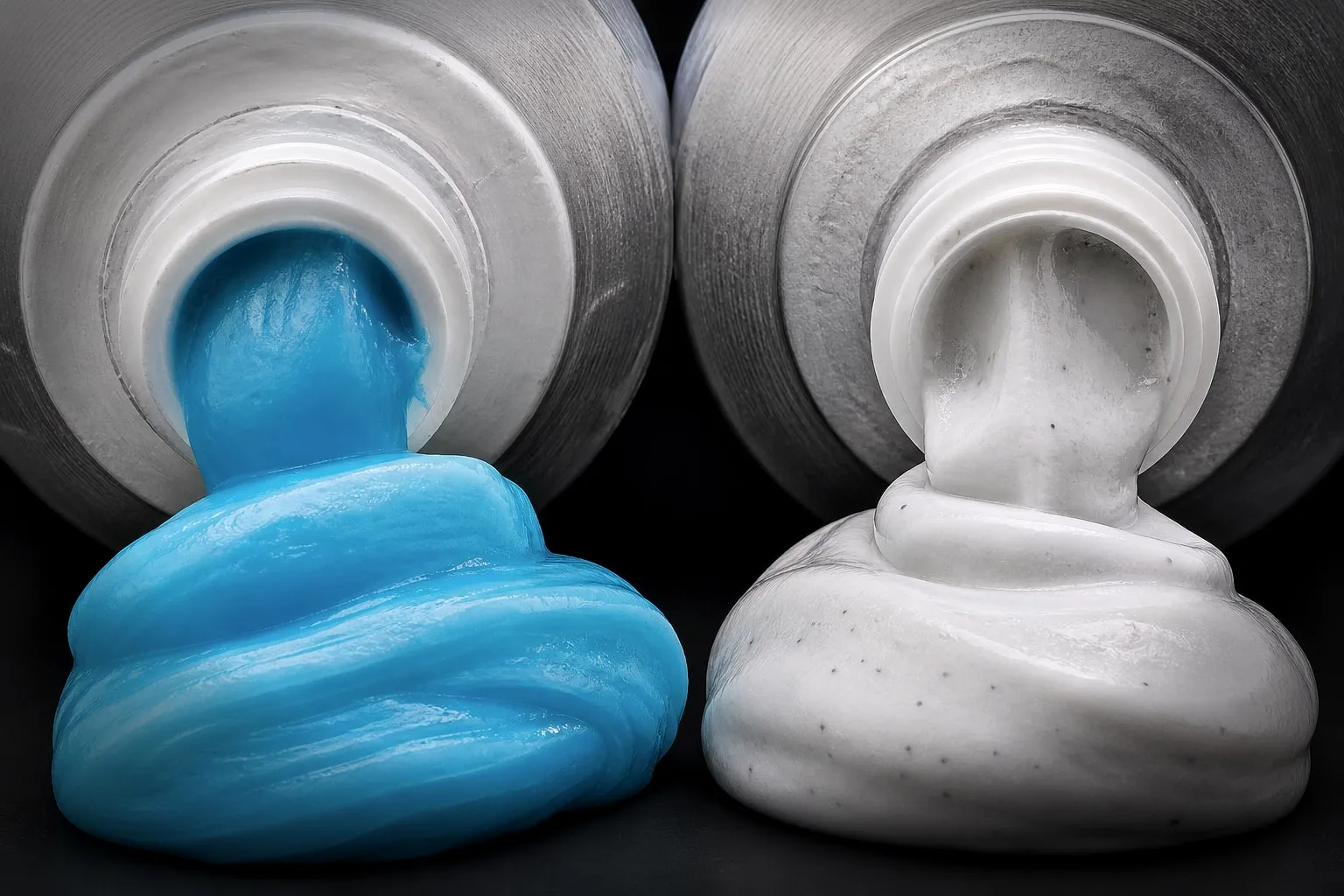
Read any thread where these two come up and it turns into a fight almost immediately. Somebody arrives wanting to avoid fluoride, somebody else tells them that’s absurd, and nobody explains the actual difference.
Here’s the actual difference. It takes two paragraphs, and after it the argument mostly dissolves.
They don’t do the same thing
Somebody in one thread stated the mechanism more precisely than most product pages manage:
Fluoride forms fluorapatite, which requires a lower pH before demineralization occurs vs. Hydroxyapatite r/askdentists
That single sentence is the whole distinction.
Enamel is a crystal called hydroxyapatite. When acid arrives, that crystal starts dissolving below a certain acidity.
Fluoride swaps into the crystal and turns it into fluorapatite — a slightly different crystal that needs a more acidic mouth before it starts breaking down. It doesn’t add material. It changes the material into a tougher version of itself.
Hydroxyapatite applied to a tooth does something else: it supplies the same mineral the enamel is made of, so it can settle into surface defects and rebuild the surface as enamel rather than as a coating.
One makes the existing crystal harder to attack. The other puts more of the original crystal back. Those aren’t competing claims. They’re different verbs.
Fluoride’s advantage is seventy years of evidence
This is the part the hydroxyapatite side tends to skip, and it shouldn’t:
Fluoride is the golden standard and has been considered one of the greatest public health initiatives of the 20th century. Finding a toothpaste without fluoride would be extremely difficult and not worthwhile. r/askdentists
That’s a fair summary. Water fluoridation began in the 1940s, and the effect on cavity rates across whole populations is one of the better-documented findings in public health. Nothing else in this category has a body of evidence that size.
Hydroxyapatite has been in Japanese toothpaste since the 1980s and has good supporting work, but the total volume of evidence is much smaller. Anyone telling you it beats fluoride outright is going further than the data does.
And the skepticism runs both ways
It’s usually assumed the doubters are anti-fluoride. Some are the reverse:
There are too many potential health risks with putting nano-sized hydroxyapatite particles in my mouth. I can maybe understand people avoiding ingesting fluorinated water but I don’t see a reason to avoid fluoride toothpaste. r/Biohackers
That comment collected upvotes, and it’s a reasonable instinct — nano-scale particles are newer and less studied than a mineral ion that’s been in municipal water for eighty years.
Meanwhile the fluoride worry usually arrives in a specific form:
Fluoride is already in water, food, tea and cause lot of issues like pineal gland calcification, i would like to use novamin/nanoHydroxyapatite whitout fluoriode toothpaste. r/askdentists
Worth being straight about this one. The pineal gland claim circulates widely and is not supported by evidence at the exposures people actually get. Fluoride harm is real but specific: excessive intake during childhood tooth development causes fluorosis, which is why children’s toothpaste is dosed lower and why the pea-sized amount exists.
If you’d still rather not use it, that’s a legitimate personal choice — but it should be made knowing that the thing being avoided is one of the best-evidenced measures in the field.
The frustration nobody resolves
There’s a practical trap in the middle of all this:
Hello, i bought Sensodyne but saddly…All the sensodyne with Novamin has fluoride :( :( So sad… Any others toothpaste with Novamin and NO Fluoride ? r/askdentists
People who want one ingredient and not the other keep discovering the market doesn’t stock the combination they’ve decided on. Which is a hint that the choice was framed wrong in the first place.
Because look at what the person who’d actually thought it through was doing:
I’m adding nHA to my pro-fluoride dental care. r/Biohackers
Adding. Not choosing. That’s the sensible position and almost nobody arrives at it, because every product on the shelf is sold as an alternative to the other one.
The question that actually decides it
Here’s what gets lost while everyone argues about ingredients: neither ingredient does anything unless it’s touching the tooth.
Fluoride toothpaste rinsed off after ten seconds is doing less than hydroxyapatite left on overnight. Hydroxyapatite in a paste you spit out is doing less than fluoride in a gel that stays. The ingredient sets what’s possible; contact time decides what actually happens.
So the useful order of questions is the reverse of the usual one:
1. How long does it stay on the tooth? Rinsed, spat, or left?
2. When can it be used? Only at a sink, or anywhere?
3. And then — which ingredient?
Most people argue about the third and never ask the first two. The first two are where the difference between products actually lives.
The short version
Fluoride makes the crystal harder to dissolve. Hydroxyapatite puts the crystal back. Fluoride has far more evidence; hydroxyapatite is the material itself.
They aren’t rivals, and the person quietly using both was right all along.
Questions people actually ask
Is hydroxyapatite better than fluoride?
No, and it isn't trying to be the same thing. Fluoride makes enamel harder to dissolve. Hydroxyapatite supplies the mineral enamel is built from. Fluoride has far more evidence behind it; hydroxyapatite has the advantage of being the material itself.
Can you use hydroxyapatite and fluoride together?
Yes, and plenty of people do — one at one time of day, the other at another. They act by different routes, so there's no reason they cancel out.
Is fluoride dangerous?
At the amounts in toothpaste and tap water, no. The concerns that circulate online, including claims about the pineal gland, are not supported by evidence. Real fluoride harm comes from large excesses during childhood tooth development.