ingredients
Your Enamel Is 97% One Mineral. You Can Buy It.
Your enamel is 97% hydroxyapatite. Putting it back is a real idea with real evidence — and a label full of numbers that mostly nobody explains.
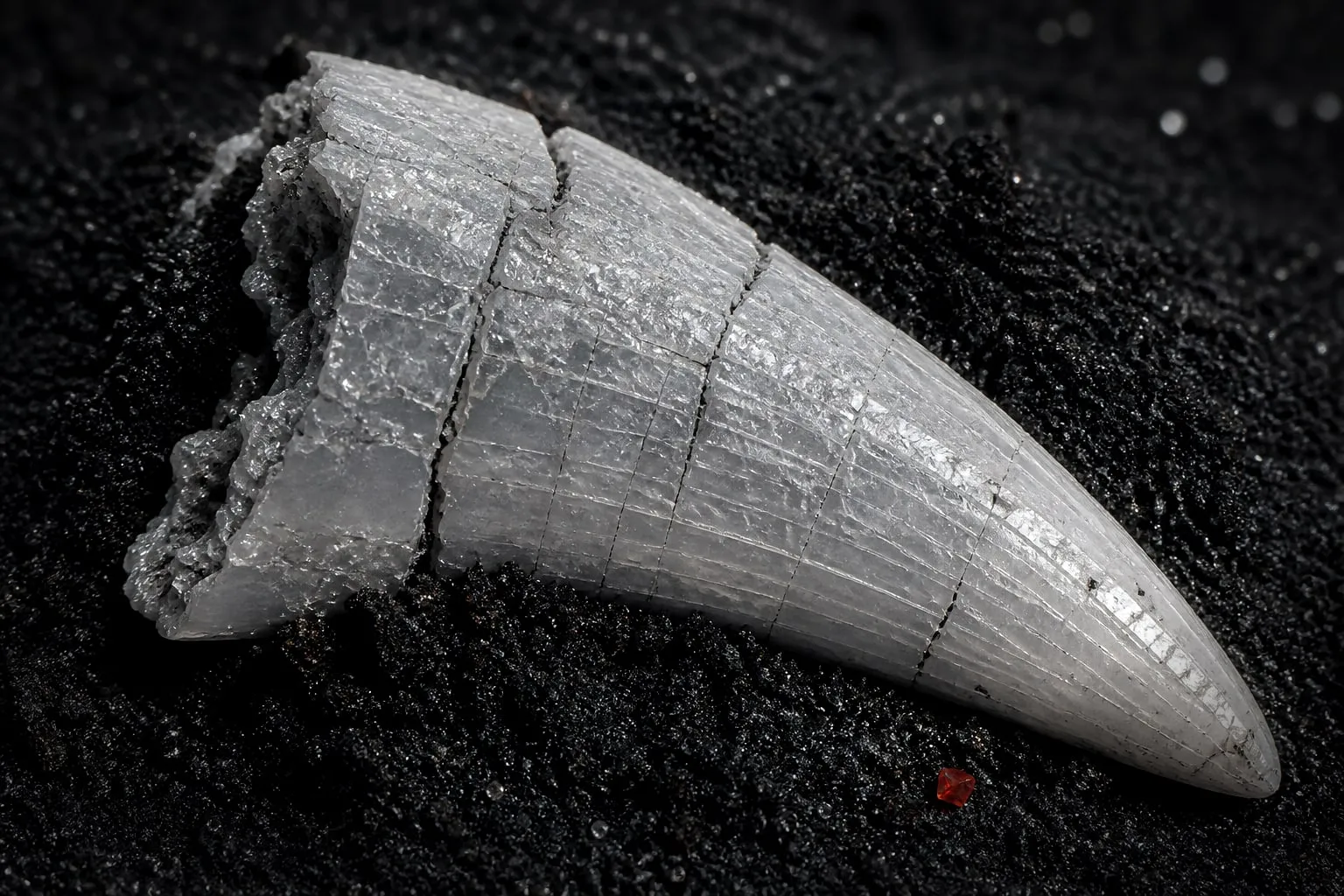
There’s a mineral called hydroxyapatite. It makes up about 97% of your tooth enamel and roughly 70% of your bones.
You can buy it. That’s the entire premise, and it’s a good one — but the labels have turned into an argument nobody explains properly, and most people end up checking the wrong thing.
The idea is not new and not fringe
It came out of NASA research in the 1970s, on how to rebuild bone in astronauts losing density in zero gravity. A Japanese company took the material and put it in toothpaste. Apagard has been on shelves since the 1980s, which means this has had four decades of consumer use in a country that pays close attention to teeth.
It reached Europe and the US properly only in the last few years. That’s why it feels like a trend. It isn’t one — it’s an import.
What it’s doing, mechanically
Enamel is not inert. It runs a constant exchange.
Eat something, mouth turns acidic, enamel gives up a little calcium and phosphate. Saliva recovers, pH climbs back, minerals go back in. Demineralization and remineralization, all day, every day. A cavity is what happens when the first side of that ledger wins for long enough.
Fluoride helps by swapping into the crystal and making a version that dissolves at a lower pH — harder to attack.
Hydroxyapatite helps differently: it supplies the missing material directly. Same mineral your enamel is made of, delivered to the surface rather than waiting for saliva to bring it. Under an electron microscope you can see particles sitting into the surface, filling the microscopic pits where mineral was lost.
That’s also why people report sensitivity dropping. Sensitivity is largely open dentinal tubules — microscopic tunnels — and small particles plug them:
I had one really sensitive tooth a few months ago, either hot or cold caused me pain. Now it’s completely back to normal. And my teeth look whiter too. r/Biohackers
I really can’t say enough good things about nanohydroxyapatite; my teeth were never this happy before. r/Biohackers
Now the argument
Go into any thread about this and someone will start arguing about the number on the box. It’s the wrong argument, and it sends people to the wrong products.
Two things actually decide whether hydroxyapatite does anything for you.
The first is particle size. Nano means the crystals are close to the size of the ones already in your enamel. Bigger particles sit on top of the tooth; nano-sized ones integrate into it. A label that says only hydroxyapatite is telling you less than one that says nano-hydroxyapatite — and that difference is the one worth checking.
The second is contact time, and almost nobody talks about it. Toothpaste is a rinse-off product. It touches your teeth for two minutes and then you spit most of it into the sink. Whatever mineral it was carrying goes down the drain with it.
A leave-on product is a completely different equation. It stays on the enamel and keeps working — no spitting, no rinsing, nothing washed away. Over a day that adds up to far more contact than a paste can manage in two minutes twice a day.
Arguing about the number on the tube while ignoring how long it stays is like comparing a sprinter’s top speed to a marathon runner’s and concluding the marathon runner is slow.
What to actually read on a label:
- Does it say nano-hydroxyapatite, or just hydroxyapatite?
- Is it rinse-off or leave-on? That changes everything.
- Is anything else doing work — xylitol starves cavity bacteria, buffers push pH back up?
- Is it replacing your fluoride, or sitting alongside it?
CariSpray is a leave-on nano-hydroxyapatite spray with xylitol and a bicarbonate buffer, so it ticks all four. Two seconds, no rinsing, safe to swallow — the mineral stays on the tooth instead of going down the sink, which is the entire point.
Is it instead of fluoride?
This is where the topic gets tribal, and it doesn’t need to be.
Fluoride has the deepest evidence base of anything in oral care, by a wide margin. Hydroxyapatite has a smaller but real and growing one, and the EU’s own consumer safety committee has assessed the nano form as safe.
They do different jobs and sit together fine. Plenty of people brush with fluoride toothpaste and use something hydroxyapatite-based on top of it — through the day and again before bed, when the mouth goes dry and nothing else is helping. The person who mattered most in these threads wasn’t picking a side:
a lot of people don’t realise this. I was born with mild enamel hypoplasia… the fancy toothpastes don’t change much if you can brush consistently, but if you can’t, then try to get the long-lasting enamel protection kind r/ADHD
Which is the sanest framing anyone offered. If you’re inconsistent, if your mouth is dry, if you’re prone to cavities anyway — the margins are exactly where you live, and this is the easiest thing that moves them.
What to expect
Every day your enamel loses a little mineral and puts some back. A leave-on hydroxyapatite formula tips that balance toward repair, every single time you use it. Over months, that’s the whole game — because months is the timescale teeth actually work on.
People notice it in the order you’d expect: the mouth stops feeling stripped after a few days, sensitivity to cold settles, and the teeth start looking glossier rather than chalky, because a remineralized surface reflects light differently. Use it morning, after anything acidic, and last thing at night, and you’re supplying mineral at the three moments enamel is most likely to be losing it.
Questions people actually ask
Is hydroxyapatite better than fluoride?
They work differently. Fluoride swaps into the enamel crystal and makes it harder to dissolve. Hydroxyapatite supplies the mineral itself. Most people don't have to choose — plenty of routines use both, at different times of day.
Does the percentage on the box matter?
It matters, but not on its own. Concentration, particle size and how long the product stays on the tooth all interact. A leave-on product at a low percentage and a rinse-off paste at a high one aren't comparable numbers.
What does 'nano' actually mean here?
Particle size below 100 nanometres — roughly the size of the crystals in natural enamel. Smaller particles settle into the surface rather than on top of it. Labels that say only 'hydroxyapatite' don't tell you the size.