dry mouth
The Problem Might Be Airflow, Not Saliva
For the people it works for it works well, and the reason is airflow rather than saliva. It also fails in a specific way, and there is one thing to check first.
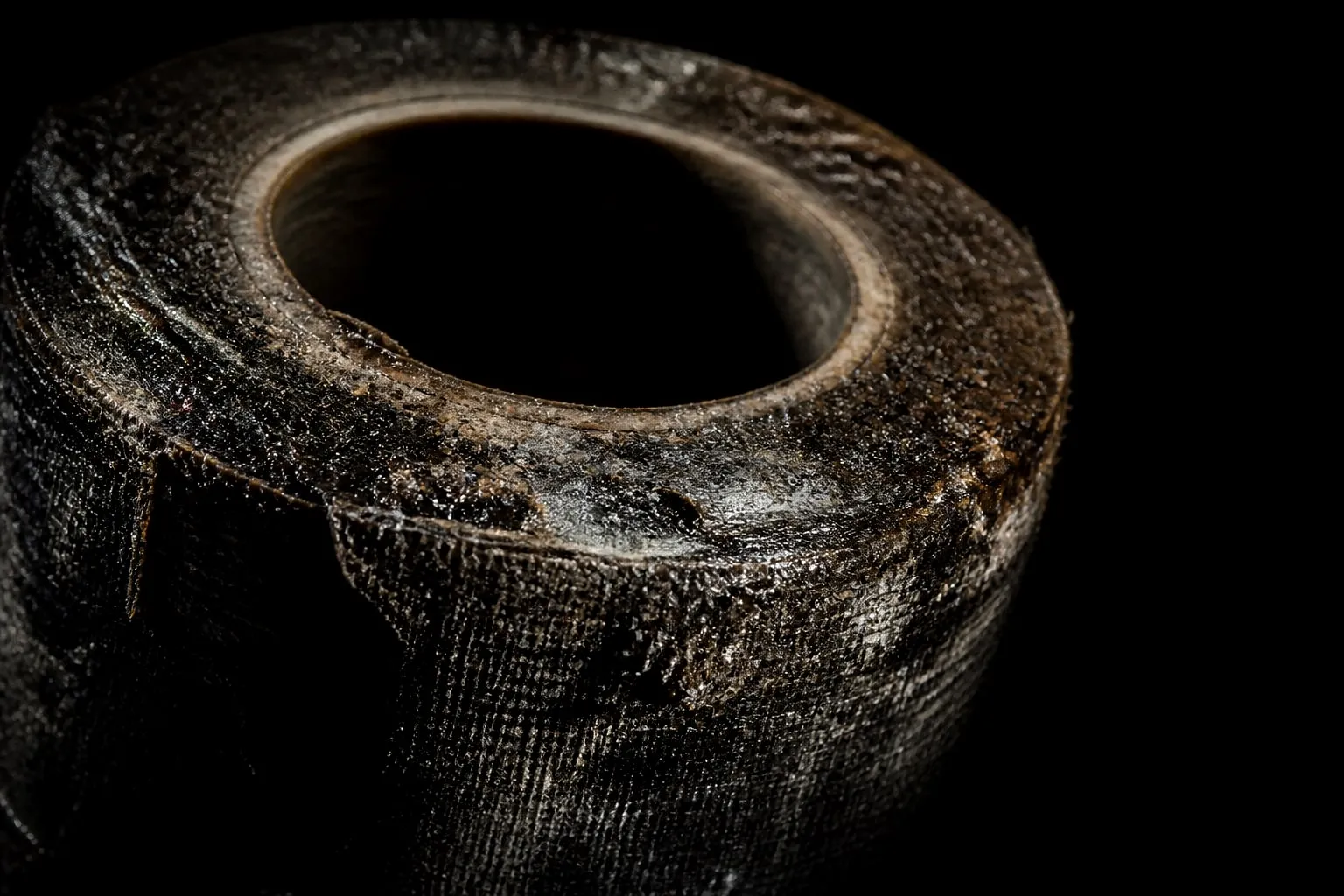
Mouth taping has arrived as a wellness trend, which usually means the underlying idea is either nonsense or a real thing wrapped in overstatement.
This one is the second. People with genuinely dry mouths found it independently, and the reason it works is more specific than the marketing says.
What it’s actually fixing
Somebody with Sjögren’s — an autoimmune condition that destroys saliva production — described their routine:
Many mornings I have to pull my lips away from my teeth. I use mouth tape to hold my mouth closed. It helps. r/Sjogrens
Pull my lips away from my teeth. That’s what a genuinely dry mouth feels like on waking, and note what helped: not more saliva. Less evaporation.
An open mouth is an evaporation surface. Air moves across the tongue and palate for six to eight hours, and whatever moisture is there leaves. Saliva production is already at its lowest overnight, so the loss and the shortfall arrive together.
Which produces the single most useful diagnostic question in the whole subject, and almost nobody is asked it:
Is your mouth dry only on waking, or dry all day?
Only on waking — that’s airflow. Taping addresses the cause directly.
All day — that’s production. Taping does nothing, because the problem isn’t that the moisture is leaving.
Two different problems, opposite responses, and a great many people spend years buying rinses for a problem that was about breathing.
And there’s a second consequence nobody mentions
Somebody in a biohacking thread flagged it bluntly:
New research showing cavities due to sleeping with mouth open and no protection overnight from saliva. Tape your mouth shut r/Biohackers
Overstated as a research claim, and directionally right about the mechanism.
Saliva is the mouth’s entire buffering and repair system. It neutralizes acid and carries calcium and phosphate back to the enamel. Remove it for eight hours and the acid produced by bacteria sits undiluted on the teeth with nothing counteracting it.
That’s why decay in habitual mouth breathers concentrates on the upper front teeth — the surfaces most exposed to moving air and least reached by whatever saliva remains.
So mouth breathing isn’t only uncomfortable. It’s the longest unprotected stretch in the day, made longer.
What people actually use
Two accounts, and both mention the specific tape:
I use nexcare gentle paper tape to tape my mouth shut when I sleep. It forces me to breathe through my nose which limits mouth breathing (negatively impacts sleep/grinding) and promotes nasal breathing r/bruxism
tape your mouth to ensure nasal-only breathing. Breathe Right strips. Snore Rx pro mouth guard. r/sleep
Porous paper surgical tape, and that detail matters. Not duct tape, not packing tape, not anything designed to seal.
And the application is smaller than people imagine: one short strip, vertically, over the center of the lips. That’s enough to discourage the mouth falling open, and it leaves the corners free so air can still get through if the nose blocks.
Where it fails, and why
The most useful negative report:
I’ve tried mouth taping but I end up feeling like I can’t breathe so always end up removing it. r/sleep
That isn’t a failure of willpower. It’s information: the nose isn’t passing enough air.
Which is the thing to fix first. Chronic congestion, allergic rhinitis, a deviated septum, enlarged turbinates or polyps all mean the mouth is open because it has to be. Taping a mouth shut when the nose doesn’t work is uncomfortable at best and dangerous at worst.
Do not tape if you can’t breathe comfortably through your nose with your mouth closed while awake. Do not tape if you have untreated sleep apnea, or suspect you might — that needs assessing, not covering. Do not tape after drinking, or if you’re unwell and might vomit. And not for children.
A ten-minute test while awake, lying down, mouth closed, breathing only through the nose, tells you most of what you need to know.
What to judge anything by, if the nights are the problem
Since the night is a six-to-eight hour stretch with no swallowing, no reapplication and no water, the useful question about anything sold for it is narrow:
Is it still doing something at 4am? A rinse is finished in minutes. That’s fine for a dinner and irrelevant here.
Does it stay on the surfaces, or only wet them? Anything that runs off stops working when it goes.
Does it need you to wake up and use it? If yes, it doesn’t cover the night.
And does it address the loss or the shortfall? Tape reduces the loss. A saliva substitute replaces the shortfall. Somebody with both problems needs both, and somebody with one is buying the wrong thing half the time.
We put a shelf of named products through exactly those questions, worst to best: Five Things for a Dry Mouth at Night, Ranked.
The other things in the same category
Taping is the cheapest item on a longer list, and the rest is worth knowing:
Nasal strips hold the nostrils open mechanically. No adhesive on the lips, and no risk if the nose blocks.
Treating the congestion — a steroid nasal spray for allergic rhinitis, or an ENT assessment for a structural cause. This is the actual fix rather than a workaround.
Side sleeping, which reduces the tendency of the jaw to fall open.
And humidifying the room, which lowers how much a given amount of airflow costs you.
The short version
An open mouth evaporates saliva for eight hours, and taping stops that. If your mouth is dry only on waking, this is aimed at the right thing.
If it’s dry all day, this is aimed at the wrong thing entirely.
And if tape makes you feel you can’t breathe, that isn’t the tape failing. That’s your nose telling you what the actual problem is.
Questions people actually ask
Does mouth taping help dry mouth?
For people whose mouth is dry only on waking, often yes. An open mouth evaporates saliva for eight hours, so closing it removes the cause rather than replacing what was lost. For people dry all day, it does nothing — that's a production problem.
Is mouth taping safe?
For most people, with porous surgical tape and a clear nose, yes. It is not safe if you can't breathe through your nose, if you have untreated sleep apnea, if you've been drinking, or if you might vomit. Blocked nose means no tape.
How do you know if mouth breathing is your problem?
The pattern is the answer. Dry and sticky on waking, fine by mid-morning, means airflow. Dry all day regardless of sleep means the glands. Those need opposite responses, and mixing them up wastes years.
What tape should you use?
Porous paper surgical tape, applied vertically as one small strip over the center of the lips rather than sealing the whole mouth. It should peel off easily. Anything that seals completely is the wrong approach.