weird
The Cold Never Got Anywhere Near Your Forehead
The pain lands behind your eyes. Nothing cold ever got near there — the whole event takes place on the roof of your mouth, on the toothache nerve.
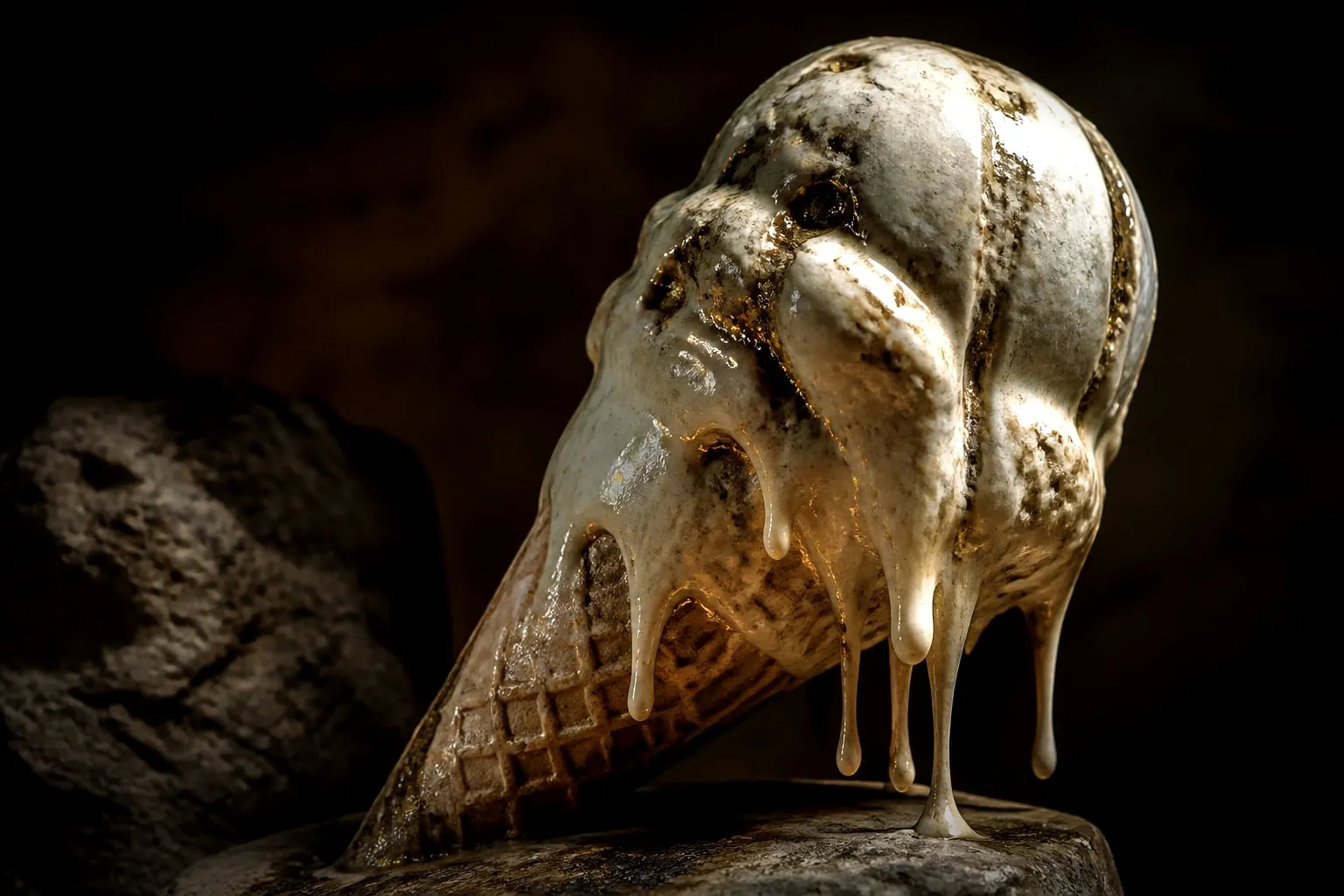
Nothing cold has ever touched your forehead. That’s where it hurts anyway.
The slushie went nowhere near it. The pain still arrives right behind your eyes, about ten seconds in, and feels like it is happening in the middle of your head.
It isn’t. The whole event takes place on the roof of your mouth.
Your palate has the alarm, your forehead has the speaker
Behind the roof of your mouth sits a cluster of nerves called the sphenopalatine ganglion. Cold hits the palate or the back of the throat, that cluster fires, and the signal travels up the trigeminal nerve.
The trigeminal is the main sensory cable of the face. It carries the palate. It also carries the forehead and the temples. And it is the same nerve that delivers a toothache.
One cable, several rooms. When something comes screaming up it, the brain has to work out which room it started in — and with a cold shock on the palate, it gets it wrong.
That’s referred pain. Same trick as a heart attack that hurts in the left arm.
There’s also a simpler reason it can’t be what it feels like: the brain has no pain receptors at all. It’s the one organ that cannot report an injury to itself.
What the ultrasound saw
In 2012 a team working with the Veterans Affairs New Jersey Health Care System sat 13 volunteers down and had them sip ice water through a straw held against the upper palate. Transcranial Doppler watched the arteries the entire time.
One vessel did something dramatic. The anterior cerebral artery dilated — a sudden flood of blood — and the pain showed up at the same moment. Shortly after, the same vessel clamped back down, and the pain went with it.
Their reading of it: the skull is a sealed box that cannot expand. Flooding warm blood into the front of the brain may be a defense against the cold, and the pressure of that flood inside a rigid box is what you actually feel.
The headache isn’t the cold. It’s the reaction to it.
145 kids, 100 ml of ice cream, and a stopwatch
The most useful evidence on avoiding one came out of a middle school in Hamilton, Canada, and was published in the BMJ in 2002.
145 students, average age 12.7, were each handed 100 ml of ice cream and randomly assigned one instruction. Half had to finish it in under five seconds. Half had to take more than thirty.
Fast group: 27% got a headache. Slow group: 13%.
Twice the risk, from speed alone. Most were brief — 59% of the headaches were over in under ten seconds.
The fix is warmth, not time
Press your tongue flat against the roof of your mouth and leave it there. That’s the whole intervention: put heat back where the cold landed. Warm water works, so does cupping your hands over your mouth and breathing into them.
Nothing stops one faster than warming the palate, because nothing else is addressing the place it’s happening.
It has an official name and a code number
It sits in the international headache classification at 4.5.2 — headache attributed to ingestion or inhalation of a cold stimulus. Frontal or temporal. Brought on immediately by cold on the palate or the back of the throat. Resolves within ten minutes.
The classification adds two details worth having. Crushed ice provokes it best, better than solid ice cream. And it’s more common in people who get migraines — in those whose migraine is one-sided, the brain freeze tends to land on the same side.
Why headache researchers keep coming back to it
Almost no headache can be ordered on demand. A migraine does not turn up because a lab booked the room.
This one does. You can start it, stop it, watch the artery do its part, and run it again on the same person an hour later.
The thing that ruins a milkshake is one of the only headaches on earth that can be scheduled.
Questions people actually ask
Where does brain freeze actually happen?
On the roof of your mouth and the back of your throat. The cold sets off nerves there, the signal travels up the trigeminal nerve, and the brain misreads which part of the face it came from. The pain you feel in your forehead is referred pain.
How do you stop a brain freeze?
Warm the palate back up. Press your tongue flat against the roof of your mouth and hold it there, or drink something warm. Most of them are over in under ten seconds anyway.
Why can't it be happening in the brain?
The brain has no pain receptors. It cannot feel anything done to it directly, which is why brain surgery can be performed on someone awake.