cost
The Interval Should Follow Your Risk
How often you need dental X-rays should follow your risk, not the calendar. And the radiation in one is far smaller than almost anybody guesses.
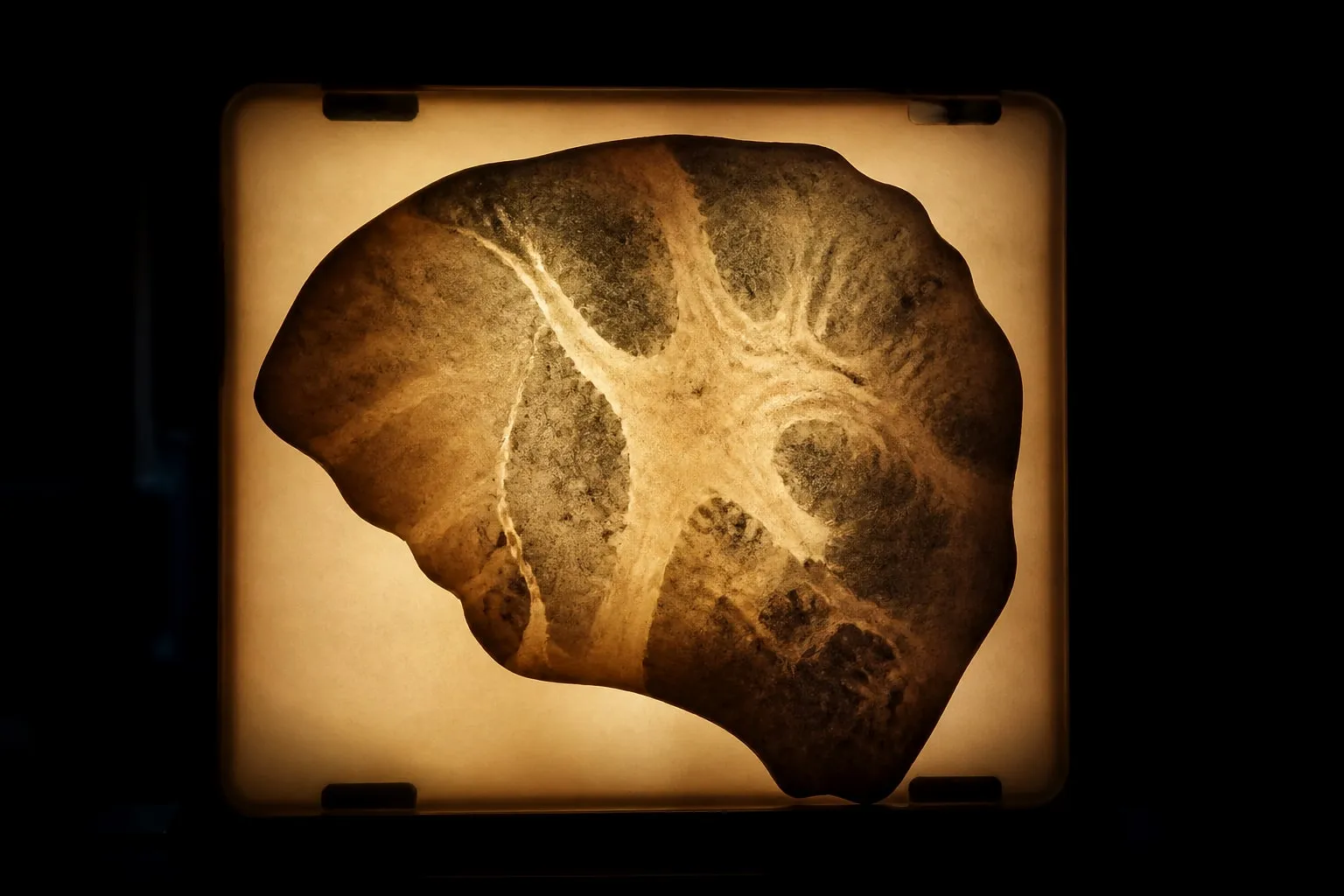
Two arguments get made about dental X-rays and both are half right.
“They’re just doing it to bill me.” Sometimes true, and the fixed annual interval is where it hides.
“You can’t diagnose without them.” Also true, and it’s the reason refusing them entirely is a bad idea.
The resolution is that the interval should be justified by your risk, and almost nobody is told what their risk category is.
What X-rays actually find
The decay a dentist can see by looking is the decay on surfaces they can see.
Between teeth is not one of those surfaces. Two teeth touching leave a contact point that light doesn’t reach and a mirror can’t get behind, and that is one of the commonest places for a cavity to start.
Under an existing filling is another. Decay recurring beneath a restoration is invisible from above until the filling fails.
Around a root tip is a third — an abscess forming in bone shows on film long before anything is felt.
So the honest version is: a visual exam finds what it finds, and a clean visual exam is not the same as a clean mouth. This is why the second-opinion advice in these threads always includes the same condition — no X-rays, no opinion.
Which is why a whole informal practice has grown up around them:
You can post your X-rays on the askdentists sub and they can weigh in on the severity of your cavities! I’ve posted my X-rays there before to get a second opinion too :) r/ADHD
Call the office and have them email you your X-rays. Post them in this sub or you can send me a link. Some parts of your story don’t really make a lot of sense to me so X-rays would help r/askdentists
Dentists volunteering to review a stranger’s film, and asking for it before offering an opinion. That tells you how much weight the image carries.
The radiation, in proportion
This is the fear driving most refusals, and the numbers are smaller than people expect:
the newer x ray machines in dental offices emit the equivalent radiation of a five minute cell phone call. Definitely don’t go getting an x ray every day but one should be safe r/pregnant
The phone comparison isn’t technically right — phones emit non-ionizing radiation, which is a different thing entirely — but the sense of scale is correct.
A pair of bitewing X-rays delivers a dose in the region of a few microsieverts. For context, natural background radiation gives a person somewhere around 2,000 to 3,000 microsieverts a year just from the ground, the air and the sky. A transatlantic flight is roughly 30 to 80.
So a set of dental films is a rounding error against a year of simply existing, and less than one holiday.
It is not zero, which is why the interval should still be justified. But it’s small enough that the argument against annual X-rays should be about necessity and cost, not about danger.
So what should the interval be
The principle is risk-based, and it splits roughly like this.
Higher risk — every six to twelve months. A history of frequent cavities, active decay found recently, dry mouth, gum disease under treatment, braces, a high-sugar or high-acid diet, or a mouth with many existing restorations.
Lower risk — every two to three years. No new decay for several years, healthy gums, good saliva flow, stable restorations, and a routine that hasn’t changed.
Children are usually shorter intervals, because decay moves faster through thinner enamel and because eruption needs monitoring.
New patient, any risk level — a baseline set is reasonable, because everything after that is a comparison against it.
The question to ask is simply: “What’s my risk level, and what interval does that justify?” A practice that has thought about it will answer specifically. A practice that hasn’t will say it’s policy.
And the failure that goes the other way
Somebody baffled, in a thread about a missed problem:
When dentists look at x rays, what do they actually look for… how do these things get missed when that’s the whole point of the x rays? I honestly am baffled sometimes. r/pregnant
X-rays are a two-dimensional image of a three-dimensional object, and things overlap. A crack can be invisible. Early decay between teeth can hide behind the contact point. A root fracture can be a line you only see if you’re looking for it.
Which is what somebody else ran into:
Because they were not 3d x-rays, they were normal (2d I guess? Haha) x-rays. As soon as I got my first 3d X-ray they found it r/Biohackers
Cone-beam CT — the 3D version — resolves a lot of that, at a considerably higher dose and cost. It is the right tool for implant planning, complex root anatomy, impacted teeth and suspected fractures, and the wrong tool for a routine check-up.
So the escalation is a real thing to ask about when something is being missed, and not something to want by default.
Two practical things
Ask for copies. They’re your record, the request is routine, and having them is what makes a second opinion possible.
And watch what gets bundled with them. One dentist, reviewing somebody’s treatment plan, was blunt about the pattern:
This tx plan is absurd even without seeing your X-rays. What “unusual complication” on all 4 wisdom teeth? Why are there 2 redundant bone graft codes? r/askdentists
The X-ray is rarely the expensive item. What follows it can be, and the film is the thing that lets somebody else check the reasoning.
The short version
You need them often enough to catch what a visual exam can’t see, which is most decay between teeth and all decay under fillings.
Annually is right for some people and twice as often as necessary for others, and the way to find out which you are is to ask what your risk category is.
The radiation is a rounding error against a year of standing on the Earth. The cost and the necessity are the parts worth arguing about.
Questions people actually ask
How often do you actually need dental X-rays?
It depends on risk rather than the calendar. Somebody with a history of frequent cavities may need bitewings every six to twelve months; somebody with a stable mouth and no new decay for years can reasonably go two to three years between sets.
How much radiation is in a dental X-ray?
Very little. A pair of bitewings is a small fraction of what a person receives from the natural background in a year, and less than a transatlantic flight. It is not zero, which is why the interval should be justified rather than automatic.
Can a dentist find cavities without X-rays?
Not the ones between teeth or under existing fillings, which is where a lot of decay starts. A visual exam finds what it can see, and a reassuring visual exam is not evidence that nothing is there.
Can you ask for a copy of your X-rays?
Yes. They're part of your record and the request is routine. Having them means a second opinion is possible, and people post them for informal opinions online all the time.